

Skip to Content

Dental Bonding

Dental bonding is an alternative to veneers and can be used as a restorative procedure for teeth that are chipped, cracked, discolored, or misaligned.

  • Cost

    The cost of dental bonding depends on the number of teeth treated, and you receive a detailed estimate during your consultation.

    Office Fees
  • Procedure Duration

    Dental bonding is typically completed in one visit, often within 30 to 60 minutes per tooth.

    Schedule Online
  • Pain Level

    Dental bonding is minimally invasive and usually requires little to no anesthesia.

    Sedation Dentistry

Dental Bonding in Dinwiddie, VA

Dental bonding includes preparing the tooth for the procedure by lightly etching the surface and applying a bonding liquid. Once the liquid sets, a plastic resin is applied and sculpted into the desired shape. Once set, the resin is trimmed, smoothed, and polished to a natural appearance.

Bonding is used to repair or improve the appearance of a tooth. It’s commonly used in cosmetic procedures to cover chipped teeth, but can also be used as an alternative to fillings, to close up spaces, or to fill in gaps.

01.

Process of Dental Bonding

  • You receive an exam to determine if bonding is the best option for your smile goals.
  • Your tooth surface is lightly prepared to help the bonding material adhere securely.
  • The composite resin is applied, shaped to match your natural tooth, and hardened with a curing light.
  • Your bonded tooth is polished and adjusted to ensure a smooth, natural appearance and comfortable bite.

02.

Next Steps After Dental Bonding

  • Limit coffee, wine, and other staining foods for the first 24–48 hours.
  • Brush, floss, and attend regular dental checkups to protect your bonded teeth.
  • If you notice chipping or wear over time, schedule a visit for evaluation or touch-ups.

FAQ

  • Dental bonding vs. veneers: Which one should I get?

    Dental bonding and veneers are both used to fix broken teeth or cavities and help improve your smile. They can also be used to improve the general look of healthy teeth. Veneers are applied to the entire front surface of the tooth, while bonding is only applied to a small portion.

    In most cases, dental bonding is used for emergencies. If you have a cracked or fractured tooth, bonding is the quickest way to repair it and only requires one appointment. Bonding is a great solution for a quick fix for a small to moderate defect or cavity on your front tooth or teeth. Please keep in mind that veneers are an alternative solution and, while they take more time and upfront investment, provide a superior, longer-term cosmetic result.
  • What is gum contouring?

    Gum contouring is a common procedure for people who dislike their ‘gummy’ smile. We simply remove some of the gum tissue and shape it to show off more of your natural teeth.

    Typically, this is a highly personal decision that is made based on how you feel about your gums. If your gums are uneven, or they cover too much or too little of your teeth, then you may be a good candidate for gum contouring or gum reshaping.

  • How long does dental bonding last?

    Dental bonding doesn’t last as long as veneers, but the application should last approximately ten years if you are taking proper care of your teeth. This means avoiding hard candy, ice cubes, and similar substances that can break down and crack the composite material. The length of the application is also affected by the area that was bonded. For example, an imperfect bite or grinding your teeth can cause the composite to break down faster.

Where are we located?

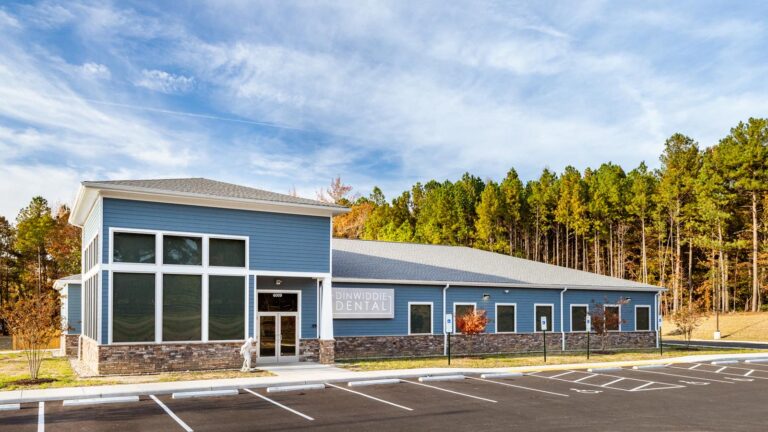
Exterior view of Dinwiddie Dental in Dinwiddie, VA.

Dinwiddie Dental

6009 AP Hill Drive
North Dinwiddie, VA 23803

Hours

Monday: 8:00 a.m.-5:00 p.m.
Tuesday: 8:00 a.m.-5:00 p.m.
Wednesday: 8:00 a.m.-5:00 p.m.
Thursday: 8:00 a.m.-5:00 p.m.
Friday: 8:00 a.m.-2:00 p.m.
Saturday: Closed
Sunday: Closed

Phone

804-861-6464

Email

[email protected]